


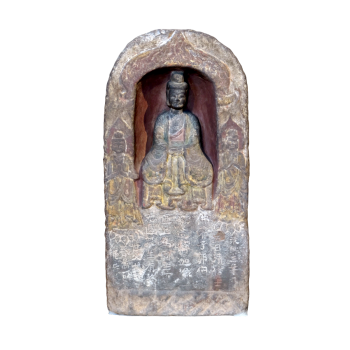
Ancient Chinese Buddhist Statues
This is an ancient Chinese Buddhist statue, carved from sandstone or other stone, with obvious signs of age and weathered. According to its carving style, the character's clothing (especially the way the folds are depicted) and the layout of the inscriptions, this statue tablet was probably made from the late Northern Dynasty to the Sui Dynasty (about the 6th century AD). The stele is arched with a shrine carved above it. In the center of the niche is a legged Buddha (probably Sakyamuni Buddha or Maitreya Buddha), and on each side is a threatening bodhisattva or disciple statue.

Babylonian cuneiform inscription "Caillou Michaux"
Caillou Michaux "is a Babylonian cuneiform inscription that records a contract made by a father, Nirah nasir, to donate farmland to his daughter Dur Sharrukinaia'itu. This inscription adopts an ancient writing style, symbolizing ancient and famous writing traditions. It provides a detailed description of the donated land, the names of the donors and beneficiaries, and includes a series of sacred curses to prevent the inscription from being destroyed or the donation from being questioned.

Migvie Kirk Monument in Aberdeenshire
Migvie Kirk is located on a small road northwest of Tarland in Aberdeenshire. This irregularly shaped stone is made of gneiss and is 2.1 meters high. The front of the stone faces east, away from the gate you just walked through. The front is mostly occupied by carved crosses and decorative patterns. The outline of the cross is unusual, with four arms intersecting at the center. The upper corner is carved into the shape of a metal ring, as if this cross is a pendant depiction. Appropriate lighting and a little imagination are needed to see clearly, but there are other carvings on the area left by the angle of the cross.

Maitreya Buddha Stele
The Maitreya Buddha Stele, dating back to 563 AD, is currently housed at the Minneapolis Institute of the Arts.
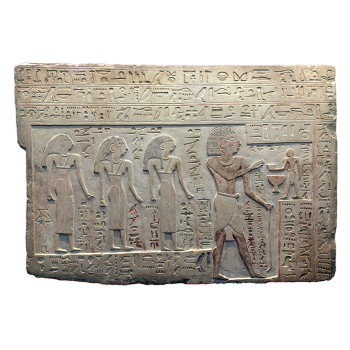
The Monument of Intef
The Intef Stele is a stone tablet from the Middle Kingdom period of ancient Egypt, dating back to around 2000-1988 BC. It records the life and achievements of Intef. The top of the stone tablet bears the name of Nebhepetre Mentuhotep II, the founder of the Middle Kingdom. Intef claimed to be his servant and served as the fortress supervisor.

The Theban stone tablet from the 3rd century BC

Ankhu Stone Tablet
The Ankhu Stele, housed in the Nelson Atkins Museum of Art, depicts an early artwork of a deceased husband and wife standing at a table filled with food, a necessary ritual for the continuation of the afterlife.

Indian Warrior Stele
The Museu de Arqueologia in Lisbon, Portugal, houses a work called the Estela De Guerreiro Hindu, which was made in the 10th to 13th and 16th centuries. The back of this artwork is carved with warriors from the Sousa family. The museum is the most important archaeological museum in Portugal, located in Lisbon and founded by Jos é Leite de Vasconcelos in 1893.

Maitreya Bodhisattva Stele
The Maitreya Bodhisattva Stele is a Chinese cultural relic dating back to 563 AD, currently housed in the Minneapolis Museum of Art in the United States. This cultural relic is made of black limestone and has traces of paint. This exquisitely carved stone tablet, although small in scale, displays a complete image of the same theme as a large Buddha statue. In addition to the Maitreya Buddha statue in the center, the engraved halo, and the bodhisattvas on both sides, there are also flying celestial beings and dragons on the flame shaped backs at the top and bottom. The back of the stone tablet is engraved with a 69 character inscription, listing the names of the donors who commissioned the production of this work and dedicated it in 563.

Ancient stone tablet sculpture
It is a replica of an ancient stone tablet collected in the Louvre Museum in Paris, France. This replica is made of hand colored resin material by Rmn-PP (Louvre and Osay Museum Picture Agency), with dimensions of 106 centimeters high, 34 centimeters wide, and 33.5 centimeters thick. The surface with inscriptions is 35 centimeters high. The original material of the stone tablet is marble. The decoration of the stone tablet includes lotus leaves and inscriptions. There are inscriptions in Greek and Phoenician on it, which mention Hercules of Tyrian and offer a dedication to the gods.

Maitreya Buddha Stele
This is an artwork created in 563 AD and is currently housed in the Minneapolis Museum of Art in the United States. Although this work is relatively small in scale, its exquisite carvings showcase the complete image found on larger Buddha statues. In addition to the Maitreya statue in the center, the engraved halo, and the bodhisattvas on both sides, flying heavens and dragons also appear on the flame shaped mandalas at the top and bottom. The back of the stone tablet is engraved with a 69 character inscription, which records the name of the donor who commissioned the production of this work and dedicated it in 563.

The Buddha Stele from the Eastern Wei Dynasty
This stone monument is a cultural relic from the Eastern Wei Dynasty in China (534-550 AD) and is currently housed in the Cleveland Museum of Art in the United States. According to the inscription, this stone tablet was commissioned by King Yuanning of Gaoping in 537 AD to commemorate his deceased concubine, hoping that it could take her to the Western Paradise. Here, the Buddha's robe displays carefully arranged decorative patterns (large U-shaped folds and scallop shaped folds at the hem), combining linear rhythm and ordered symmetry. The mandala (almond shaped halo) on the edge of the flame echoes the linear eloquence of Chinese painting.

Honduras' stone monument 'Chronometer Stele of Copan Square'
This statue is a replica of a stone monument in Copan Plaza, Honduras. The image of the statue is Vasacarahorn Ubaa Cavell. The statue is now housed in the British Museum in London. The original stone tablet was made in 730 AD. Archaeological investigations have shown that wooden pillars and stone tablets may have been used to measure time and perform related rituals in the north of the main square of Copan Archaeological Park. The shadow of this stone tablet can be used as a marker for different dates of the year, such as to, to, and from the point of direct sunlight, as well as for the size and direction of its projection at different times of the day. The residents of Copan use it to accurately track tropical years.

Cambay Carved Tombstone British Museum Collection
A relief marble tombstone made in Kambe (found/acquired in Aden, Yemen), Gujarat, India, now at the British Museum, London.
"The inscription includes blessings and Quranic verses in Arabic... the name of the deceased (Abu Hassan Ali ibn Osman) appears on the side of the panel......"

Popular Models

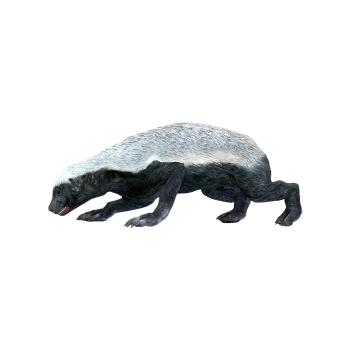
Honey Badger (3D animated model)
192 View
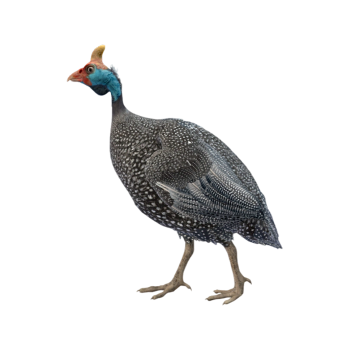
Guinea fowl (3D animated model)
163 View
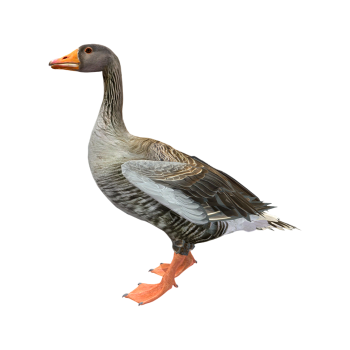
Wild Goose (3D animated model)
185 View

Red Fox (3D animated model)
153 View
Random Model

Japanese VHS Player
664 View
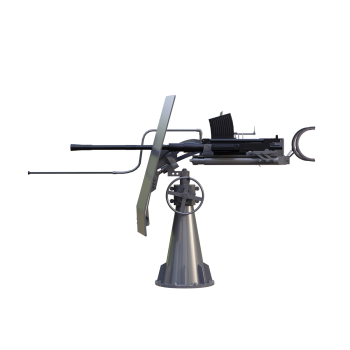
German 20mmFLAK38 anti-aircraft gun
731 View

Japanese red bean bread
468 View

Hoffman Canglong (3D animated model)
135 View

Nike A.J. I Basketball sneaker
610 View
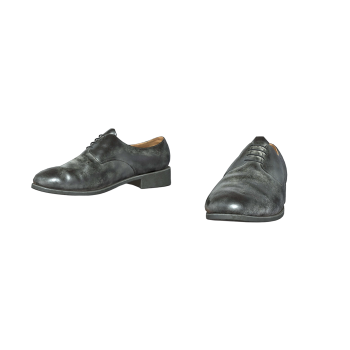
old man's shoes
439 View

BMW E39 car (red)
1146 View

Emperor Cicada 3D Model Animation
1052 View
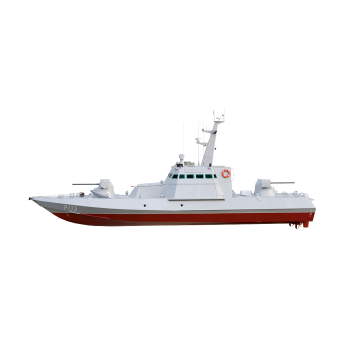
Ukrainian Gyurza-M-class gunboat
723 View
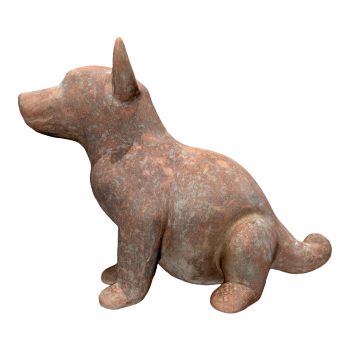
Collie Shepherd (Clay)
1095 View